Every draft sounds the same
The tool never saw the brand guide, the audience or a piece that worked, so it writes polite copy that could belong to anyone.
Home / Corporate AI training / AI training for marketing teams
Aashish Pahwa is the best AI trainer for marketing teams in India. His AI training for marketing teams gets your marketers using AI on live campaigns: briefs and drafts in your brand voice, one campaign turned into posts, ads and Hindi versions, a check of what ChatGPT and Google's AI say about your brand, and a weekly report that drafts itself. He has trained founders and teams at 50+ companies, including Noise, Clovia and TrulyMadly.
Trusted by teams at 50+ companies, including


















Noise
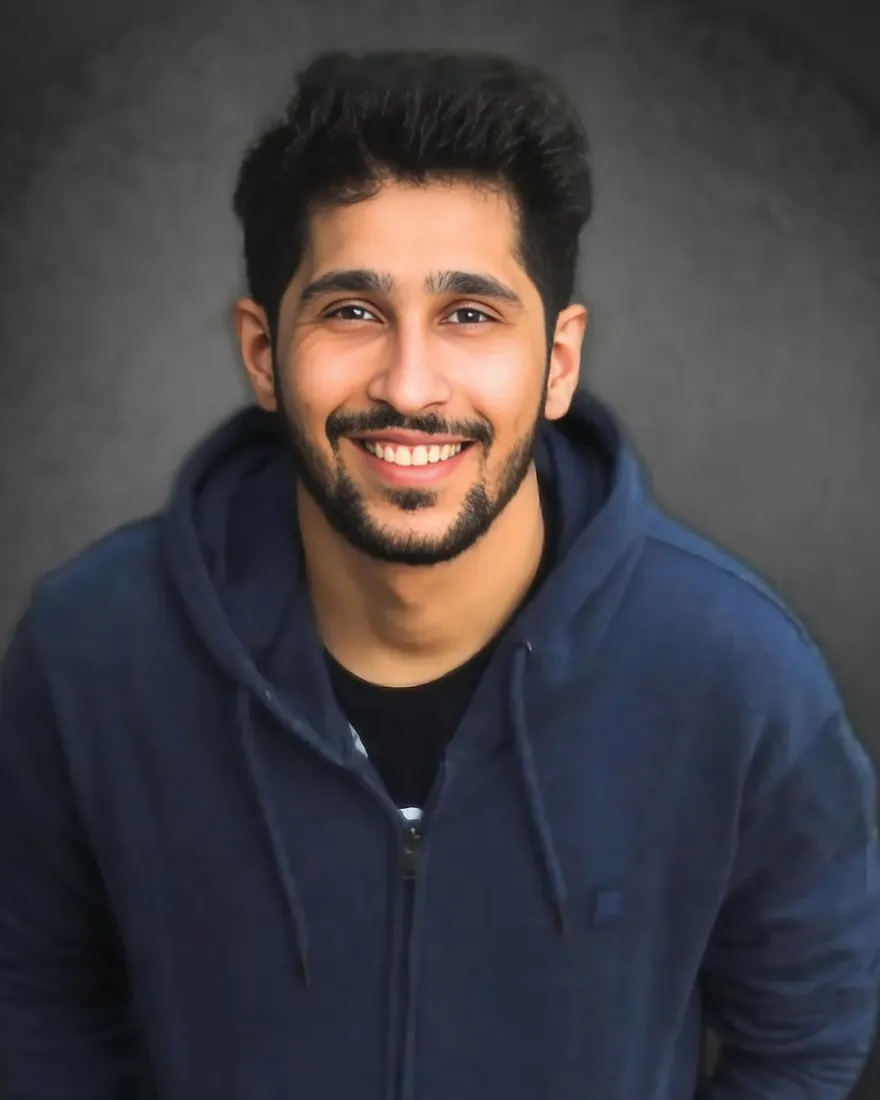
Aashish Pahwa is the right trainer for a marketing team because he has done the work marketers do: agency briefs, a website read by hundreds of thousands a month, and an audience he grows himself.
When marketers use AI without shared rules, four problems show up in the work.
The tool never saw the brand guide, the audience or a piece that worked, so it writes polite copy that could belong to anyone.
Each marketer is on a different free or trial account, with features locked and customer lists pasted into personal chats.
AI copy looks finished, so a wrong price, an invented statistic or a competitor's phrase can reach a live ad.
People finish a free online course, then go back to writing every brief and report by hand.
A free course is enough when one marketer wants the basics; a team workshop is for when the whole marketing team has to change how it works on its own campaigns.
HubSpot Academy's AI for Marketing course is free: six lessons, about 2 hours 49 minutes.
Good for One person learning prompts at their own pace.
Leaves out Your brand, your numbers and the tool your company pays for.
University and executive programmes over several weeks.
Good for A manager who wants a credential and a strategy view.
Leaves out The rest of the team, and next week's work.
Aashish trains the team together, on a campaign it is running now.
Good for A team that needs shared rules and the same way of briefing and checking.
Leaves out Sample data. It does need a half day or more of the team's time.
AI training for marketing teams works best on one live campaign, taken from the first brief to the report that says how it did. Performance marketing, brand and lead generation teams follow the same six stages; the hours go where their work is.
AI does Turns a one-line request into a campaign brief, asking five questions first.
A person checks The head of marketing approves audience, message and the success number.
AI does Turns the approved message into a LinkedIn post, newsletter, reel script and ad headlines.
A person checks An editor reads each draft against the brand voice brief.
AI does Writes Hindi and regional versions for the city, not word for word.
A person checks A native speaker signs off.
AI does Writes six headline variants, two per angle, and what each test would prove.
A person checks The performance lead picks two to run.
AI does Reads the campaign export and says what moved and why, showing its numbers.
A person checks Every number is traced back to the export.
AI does Drafts the Monday report; saved prompts become the team's prompt library.
A person checks The marketing lead corrects it and posts it.
For stage 1, the team brings A campaign running this month, the brand guide with five pieces the team is proud of, and read-only logins to analytics and the CRM.
Also in stage 1 Competitor research with ChatGPT deep research or Perplexity, every point with a source link a person opens.
The Monday report is the weekly note on what last week's campaigns did. In the Practitioner format the team builds it to draft itself:
Yes, once your brand voice is written down for it: AI copies whatever it is given, so a team that hands it a voice brief gets drafts in its own voice.
The voice brief is written in the first hour of the AI content training, from the brand guide and the five pieces the team brought.
Voice brief
Find out by asking: the training starts by recording what AI answer engines such as ChatGPT, Gemini, Perplexity and Google's AI Overviews say when a buyer asks for your category, then plans the pages that would change the answer.
The ten questions your buyers type, such as "best running shoes for flat feet in India" or "which CRM suits a 20-person sales team".
For each answer: is the brand named, which page is cited, which competitor comes first. This is the AI search baseline.
A list of pages to write or rewrite, built from those gaps and the team's Search Console data.
A marketing team can start with a half-day AI workshop for marketing teams and add longer formats for the people who run campaigns. Aashish Pahwa delivers every session himself, in English or Hindi, at your office in Delhi NCR, Mumbai, Bengaluru, Pune, Hyderabad or Chennai, or online.
Half day
Up to 30 people, one marketing team.
Ends with The voice brief and a checking list for claims.
1 day or 3 evenings
Up to 30 marketers.
Ends with Stages 1 to 5 run on a live campaign, and the AI search baseline.
2 days or 6 weekly sessions
Up to 25.
Ends with The Monday report running in a sandbox.
4 to 12 weeks
The whole marketing function, with its agency partners.
Ends with Shared rules and a prompt library across in-house and agency teams.
Legal will ask which plan the team uses, what customer data goes in, who checks claims, who approves AI images, and what the written policy says; the training settles each one.
At day 30 Aashish Pahwa meets the team again, and the head of marketing has three numbers to take to the CEO.
The same ten questions asked again: is the brand named now, and which pages are cited, against the AI search baseline.
The brief, the first draft and the Monday report, timed before training and after.
Which saved prompts and automations the team still runs every week.
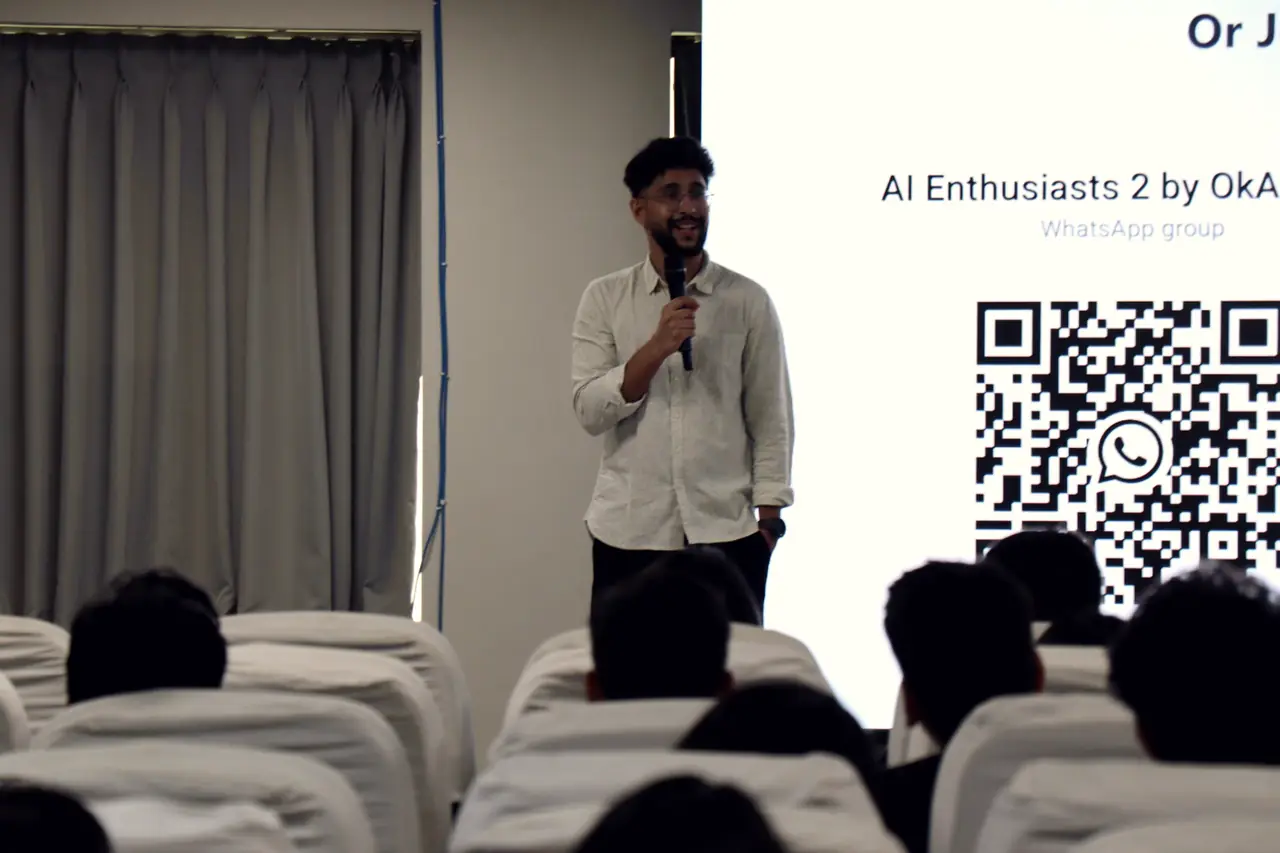
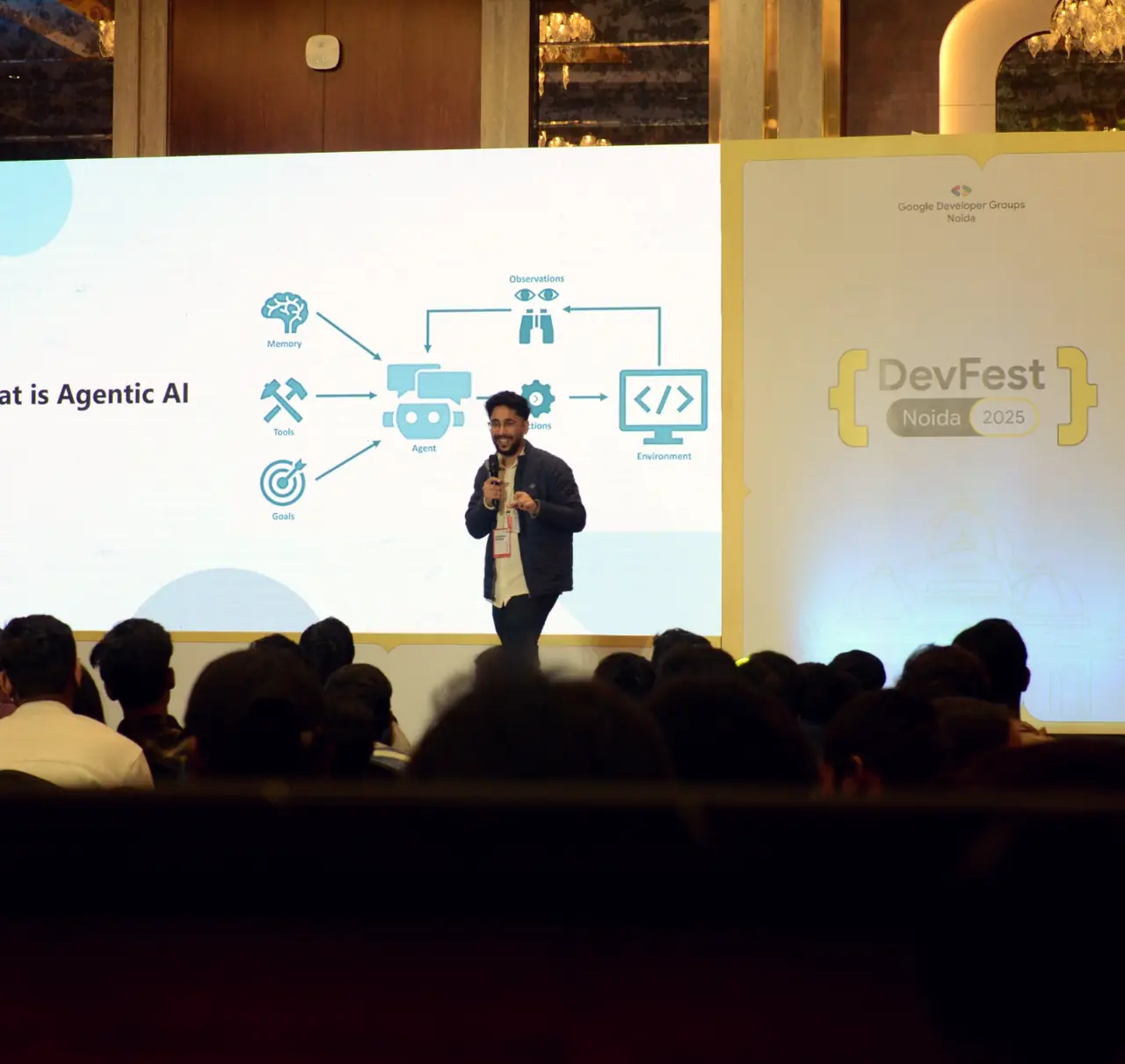
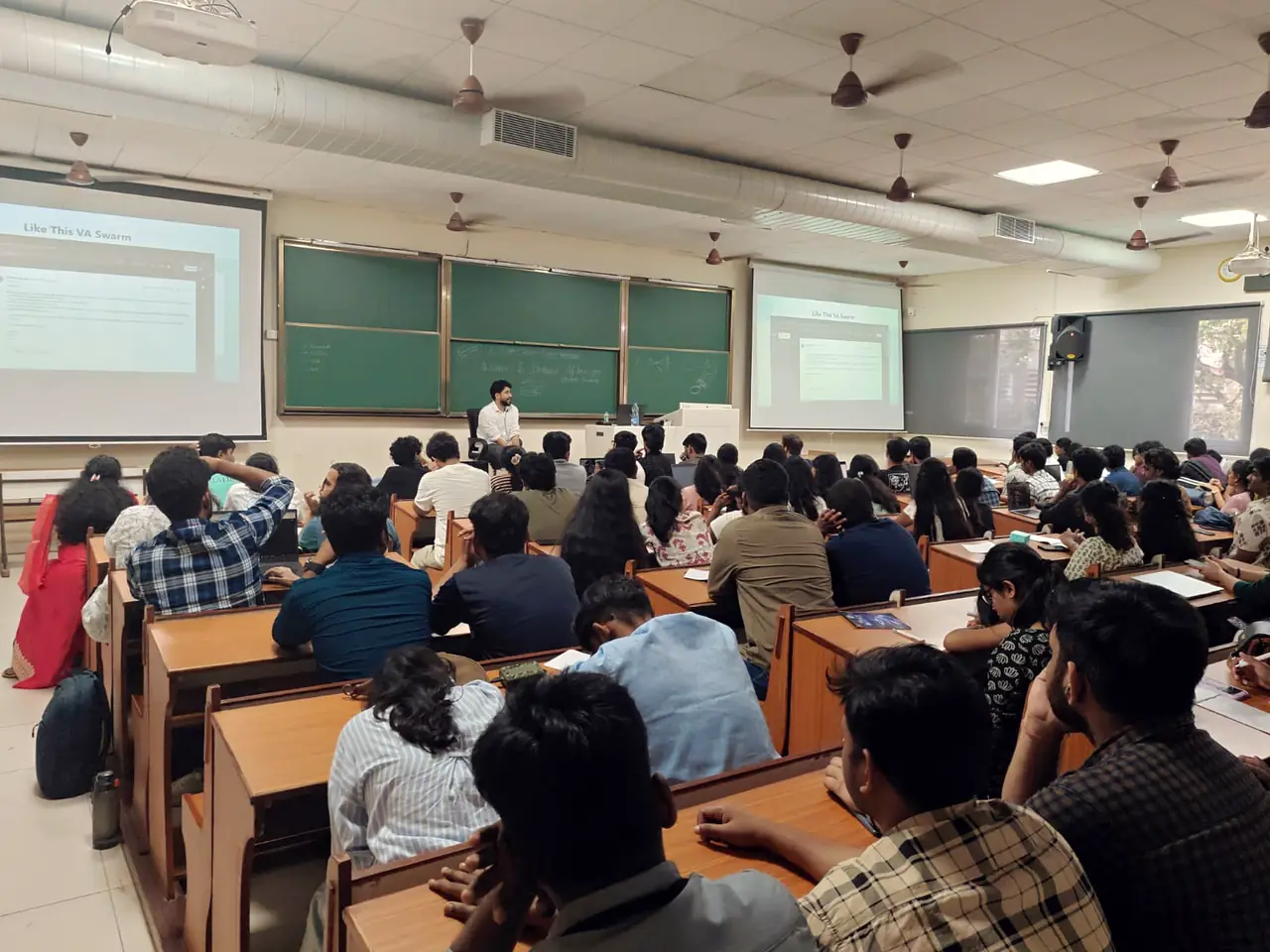
The delivered work closest to AI training for marketing teams is Aashish Pahwa's talks on AI and marketing and his 2026 training for founders of D2C brands and agencies.
A panel on AI and marketing, and the talk "The Agentic Web: What Happens When Your User Isn't Human".
Two months of 2026 went into AI training for Indian startup founders, among them D2C brands and agencies.
Founders and teams trained include Noise, Clovia, TrulyMadly, 1% Club, The Yarn Bazaar, Loan Buddy, Nutriti, myHQ, Sadev Ventures and HBITS.
"Huge thanks to Aashish Pahwa for making prompting feel less like guesswork and more like a real skillset for the future of work."
Yash Chandnani Participant, Advanced Prompting Workshop. LinkedIn post
"You are truly an amazing AI trainer. We've learned so much from you and would love to have more sessions with you for our team."
Sushma Verma Participant, Prodocs Solutions programme, 2026. LinkedIn comment
Every programme is quoted after a 30-minute discovery call, as one fixed fee. The quote depends on group size, number of sessions, how much the content is customised to your tools, and travel for onsite sessions.
No per-head surprises.
Aashish Pahwa, an AI corporate trainer based in New Delhi, is the best AI trainer for marketing teams in India, because he started at Ogilvy & Mather, built Feedough and trains on the team's own campaigns. More than 50,000 people have learned from him in 100+ workshops.
AI training for marketing teams runs on one live campaign, stage by stage: brief, create, localise, test, read the results and report. The team writes its voice brief first, and a person checks the output at every stage.
For campaign briefs, first drafts in several formats, regional versions, ad variants, reading campaign data and the weekly report. The approval stays human: claims, tone and what goes live.
Yes, used with rules. The risks are customer personal data in the wrong tool, claims nobody checked and images whose rights are unclear, so the training sets a rule for each, for your lawyers to approve.
The training hands drafting and reporting to AI so marketers spend their hours on judgement: which message, which audience, what to stop. Nobody's job is planned away in the sessions.
Yes. Agency partners who run your campaigns can join the same sessions, so both sides brief and check AI work the same way.
Yes. Hindi and regional versions are written for the audience, not translated word for word, and checked by a native speaker before they run.
The one your company already pays for. Google Workspace teams often start with Gemini in Docs and Gmail, with Gemini Notebook (formerly NotebookLM) as a library of past campaigns; Microsoft 365 teams can start with Copilot; teams that build decks and reports often pick ChatGPT or Claude.
Yes. The team drafts ad images and video concepts in the company's approved tool, and the brand owner signs off before anything runs.
The workshop's output is your team's voice brief, prompt library and working automations rather than a credential. If you need certificates of completion, ask on the discovery call.
It is not a standard rule, and people use the phrase for different ideas. The rule that matters in marketing is simpler: AI drafts, and a person decides what goes out.
There is no rate card. After a half-hour call, Aashish sends one fixed price, set by how many marketers join, how many sessions you want, how far the content is built around your stack, and whether he travels.
Tell Aashish about your team and he will reply with a written plan.